- Hogar
- Accesorios
- Broom and Sweeper Attachments
BROOM AND SWEEPER ATTACHMENTS
Clear debris, dust, leaves and light snow fast with Bobcat brooms, sweepers and blowers that push, collect or blow it out of your way.
MODELS
Barredora angular (tractores articulados)
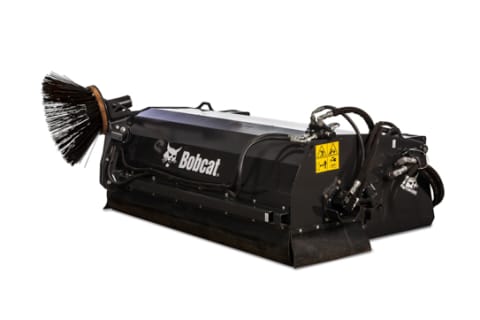
Cubo barredor - 54"
Cubo barredor - 72"
Cuchara barredora - 60"
Cucharón barredor - 44"
Cucharón barredor - 84"
Escoba angular - 48"
Escoba angular - 52"
Escoba angular - 64"
Escoba angular - 68"
Escoba angular - 84"
Soplador de turbina (tractores articulados)
TOP SWEEPER BUCKET FEATURES
The Bobcat sweeper bucket (72") attachment is designed for productive cleanup on jobsites like parking lots and sidewalks by sweeping forward or reverse and collecting debris instead of windrowing it for later pickup. A direct‑drive hydraulic motor delivers high torque with fewer parts than chain‑driven sweepers, while the hardened reversible wear edge and tool‑free bristle adjustment support efficient upkeep and long service life.
HOW TO CHOOSE BROOM & SWEEPER ATTACHMENTS
The right Bobcat® broom, sweeper or blower attachment turns your loader, or articulating tractor, Toolcat™ utility work machine or telehandler into a fast clean‑up crew. Start with what you are clearing, where you are working and how you want to handle the debris, then match the attachment to the surface and carrier.
Jobs You're Tackling
Think about the jobs you hit most often:
- General cleanup: Dirt, gravel, dried mud and light snow on lots, drives and sidewalks.
- Material collection: Sand, millings and debris that must be picked up and hauled away.
- Property and grounds care: Leaves, grass and light debris across big open areas.
Your everyday work will steer you toward angle brooms, sweepers or a turbine blower.
When to Choose an Angle Broom
Choose an angle broom attachment (including the 52-inch version for articulating tractors) when you want to push debris off the surface, not collect it.
Angle brooms shine on sidewalks, driveways, parking lots and site cleanup where you can windrow material to the side or off the edge. Hydraulically driven bristles, high‑torque motors and electric‑over‑hydraulic angle control help you sweep with speed and control. Reverse rotation and flush sweeping let you clean along curbs, corners and obstacles, while self‑centering hydraulic angling keeps the broom where it belongs on the path.
When to Choose a Sweeper
Choose a sweeper attachment when you need to collect and dump material instead of leaving a windrow.
Sweepers use tough poly bristles to flick debris into an integrated bucket, then let you dump into a pile or truck. They are a strong fit for road construction, parking lots, airports, docks, and warehouses. For dusty cleanup, the available integrated water kit helps control airborne dust and improve visibility for a cleaner, more controlled sweep.
The hardened, reversible wear edge scrapes packed material while you travel in reverse, and optional gutter brushes help you reach tight edges and expand your cleaning width.
When to Choose a Turbine Blower
Reach for a turbine blower attachment on an articulating tractor when you want to move light debris with air instead of bristles.
The turbine blower delivers high‑velocity airflow to push leaves, grass, light debris and light powder off paths, turf and hard surfaces. A 360‑degree adjustable discharge gives you precise control over airflow direction, letting you clear large areas quickly without contacting the surface.
It is a natural fit for grounds crews, campuses and landscapers managing big seasonal cleanups.
Match the Attachment to Your Carrier and Surface
- Carrier type: Angle brooms and sweepers are approved for Bobcat loaders, Toolcat™ utility work machines, mini track loaders, and small articulated loaders. Telehandlers are approved for the 84-inch angle broom and 84-inch sweeper; (the 52-inch angle broom is not approved for telehandler use). Bobcat also offers an angle broom for compact wheel loaders, and a 52-inch angle broom plus turbine blower options for articulating tractors.
- Surface type: Use angle brooms and sweepers on concrete, asphalt and compacted gravel. Choose the turbine blower when you want minimal contact on turf or delicate surfaces.
- Season and conditions: Angle brooms can handle light snow and slush,; sweepers take on mud and heavier debris,; blowers keep you ahead of leaves and dry debris.
Quick Checklist
- Primary task: Push debris aside, collect and dump material or blow it clear.
- Surface: Sidewalks, parking lots, drives, turf, pathways or mixed.
- Debris type: Dirt, gravel, millings, mud, leaves, light snow or a combination.
- Carrier: Loader, Toolcat utility work machine, articulating tractor or telehandler.
- Cleanliness level: Windrow and move on or leave a swept, collected finish.
When you narrow it down, your local Bobcat dealer can help confirm width, model and carrier compatibility so your broom, sweeper or blower is ready to go to work from day one.
FREQUENTLY ASKED QUESTIONS
What is a broom or sweeper attachment?
A broom or sweeper attachment is a hydraulically powered cleanup tool that mounts to compatible equipment to push or collect debris from hard surfaces. Angle broom attachments windrow material to the side, sweeper attachments collect debris into an integrated bucket for dumping, and turbine blower attachments use high-velocity airflow to move light debris without bristles contacting the surface.
What applications are broom and sweeper attachments used for?
Brooms and sweeper attachments are used to clear dust, dirt, gravel, leaves, and light snow from jobsites and properties quickly and consistently. Common applications include construction site cleanup, road and parking lot maintenance, sidewalk and drive lane sweeping, warehouse and dock cleanup, seasonal leaf removal, and light snow clearing where you want fast results with controlled debris placement (and collection when required).
What are some popular skid-steer loader sweeper attachments?
Popular options include Bobcat angle brooms for pushing material, and pickup sweepers that collect and dump debris. Each is built for specific cleanup needs across different jobsite surfaces.
How do you use a power broom attachment for cleanup?
A power broom attachment like the Bobcat angle broom clears light snow, dirt or debris using hydraulically driven bristles. Simply set the broom angle and engage forward or reverse rotation for effective cleanup on sidewalks, driveways and lots.
Always refer to your operator’s manual to learn how to properly operate your equipment, or contact your local Bobcat dealer for support.
GALLERY
RELATED ATTACHMENTS
Abrazadera hidráulica - Brazo estándar, E26
Abrazadera hidráulica - E20
Sujete, levante, mueva y coloque más escombros con la potencia del accesorio de abrazadera (o pulgar).
Abrazadera hidráulica - E32 y E35, brazo extensible
Abrazadera hidráulica - E32R2 y E35R2, brazo estándar/largo
Abrazadera hidráulica - E42 y E45, brazo estándar
WHY BOBCAT ATTACHMENTS
Built for
Durability
Engineered with the highest quality standards and guaranteed to work with compatible equipment.
Local Dealer Support
Authorized local dealers provide trusted advice, parts, service, and support.
Peace of Mind
Standard two-year warranty for hydraulic attachments, plus available extended warranty for select attachments.
Best Value
Competitive attachment pricing, plus available 0% financing and other limited-time special offers.
Search Attachments & Implements
Explore More
Browse by Product
ADVERTENCIA: Este producto puede exponerlo a sustancias químicas, como gases de escape del motor (incluidos los de motores diésel, si están equipados), plomo y compuestos de plomo, aceites minerales, hollín, ftalatos y monóxido de carbono, que el Estado de California reconoce como causantes de cáncer, defectos congénitos u otros daños reproductivos. Para obtener más información, visite www.P65Warnings.ca.gov.
Algunas especificaciones se basan en cálculos de ingeniería y no corresponden a mediciones reales. Se proporcionan únicamente con fines comparativos y están sujetas a cambios sin previo aviso. Las especificaciones de su equipo variarán según las variaciones normales de diseño, fabricación, condiciones de funcionamiento y otros factores.