- Home
- Attachments
- Breaker & Hammer Attachments
Breaker and Hammer Attachments
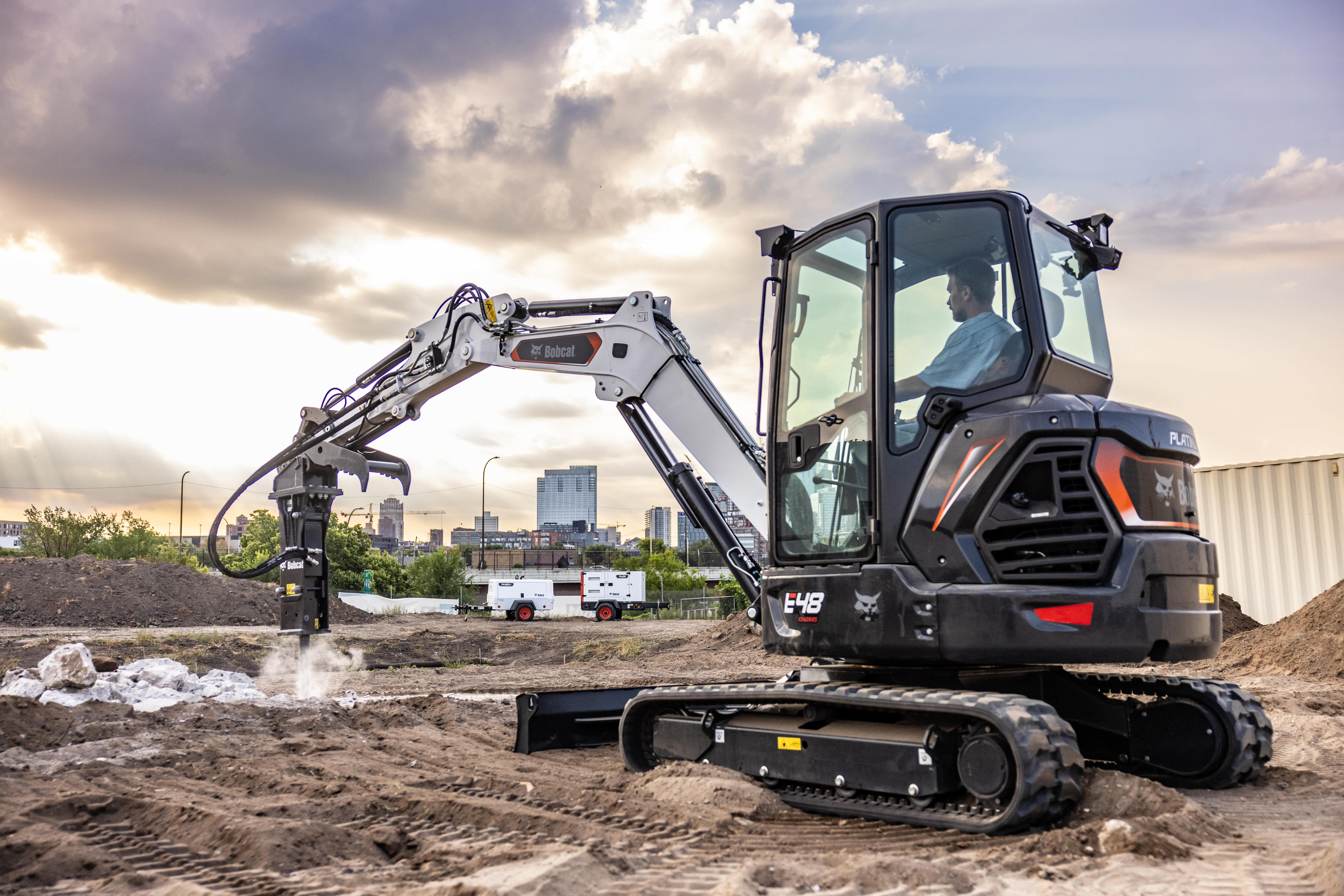
Turn your Bobcat equipment into a high-impact demolition force that breaks tough concrete, rock and asphalt with control and confidence.
MODELS
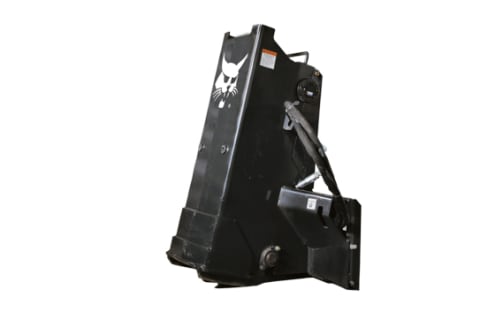
Drop Hammer
Hydraulic Breaker with Nail Point - HB1180
Hydraulic Breaker with Nail Point - HB1380
Hydraulic Breaker with Nail Point - HB2380
Hydraulic Breaker with Nail Point - HB280
Hydraulic Breaker with Nail Point - HB380
Hydraulic Breaker with Nail Point - HB580
Hydraulic Breaker with Nail Point - HB680
Hydraulic Breaker with Nail Point - HB880
Hydraulic Breaker With Nail Point - HB980
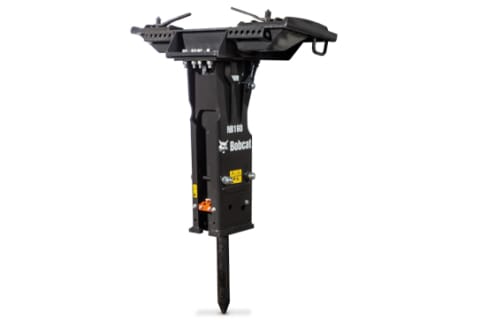
Nitrogen Breaker - NB110
Nitrogen Breaker - NB140
TOP NITROGEN BREAKER FEATURES
The Bobcat NB160 nitrogen breaker attachment breaks down concrete, rock and asphalt into removable rubble for demanding demolition work. Its long piston stroke and unique valve design help maximize impact energy while minimizing recoil and reducing hydraulic pressure fluctuations that can strain the carrier.
HOW TO CHOOSE BREAKER AND HAMMER ATTACHMENTS
The right Bobcat® breaker or drop hammer turns your machine into a focused demolition weapon. Start with what you’re breaking, then match impact style, precision and carrier to the job.
What Demolition Work You're Doing
Think about where you spend most of your time:
- Large flat slabs: Driveways, parking lots, approaches, pads.
- Tight or vertical work: Interior demo, footings, curbs, walls, patchwork.
- Heavy reinforced concrete and rock: Thicker slabs, structural concrete, tough site prep.
Your primary work will steer you toward a drop hammer, hydraulic breaker or nitrogen breaker attachment.
Which Attachment Fits Your Work
- Drop Hammer Attachment: Best for large, flat concrete slabs where speed and simplicity matter. The drop hammer delivers high impact energy with a 38-inch stroke and fractures material below the surface, helping avoid jagged debris. It runs at a steady rhythm (about 20 blows per minute), generates less noise and vibration than traditional breakers, and gives you three seconds between blows to reposition the loader.
- Hydraulic Breaker Attachment: Choose the hydraulic breaker when you need precise, versatile breaking on a range of surfaces. It’s a strong match for interior demolition, flatwork repairs, road work and tight areas where control and smooth operation matter. Features like auto power, quiet shock isolation, a cylindrical cradle for confined spaces and easy, low-part-count maintenance make it a go-to hammer for all-day use.
- Nitrogen Breaker Attachment: Reach for a nitrogen breaker when you want maximum impact energy and high-value performance on demanding jobs. A long piston stroke and unique valve design hit reinforced concrete hard while reducing recoil and strain on the carrier. Simplified internals, a single lower bushing and universal mounting caps help keep maintenance straightforward and fleets flexible.
Match Your Carrier
Breakers are sensitive to hydraulic flow and machine size, so it’s critical to match:
- Confirm hydraulic flow and pressure so the breaker runs in its designed range – too much flow can damage the attachment.
- Choose an impact energy class that fits your machine weight and the thickness of concrete or rock you typically see.
- Use Bob-Tach® or X-Change™ mounting (and available pin-on options) so you can move the breaker or drop hammer between loaders and excavators without a fight.
If you run multiple carriers in a fleet, universal mounting caps on nitrogen and hydraulic breakers help reduce the number of dedicated hammers you need. It’s important to contact your dealer to ensure the attachment you are looking at is compatible to your carrier.
Choose Tools and Options
The right tool and add-ons can make the same breaker feel like a different attachment:
- Breaker bits: Asphalt cutters, moil points, chisels, blunt tools and tamping tools let you tailor impact for pavement, structural concrete, rock or compaction work.
- Dust suppression: Water kits help control dust on road, flatwork and urban jobs.
- Service features: Go/no-go gauges, easy-access bushings and protected hose guards all support fast, on-site upkeep and longer life.
Plan to grease regularly and maintain nitrogen charge (where applicable) to protect your uptime.
Quick Checklist
- Primary task: Large slab demo, precise breaking, structural concrete or mixed work.
- Material thickness: Typical slab and structure thickness you handle.
- Carrier: Loader or excavator size and hydraulic flow range.
- Impact style: Drop hammer simplicity vs. hydraulic or nitrogen breaker versatility.
- Comfort and environment: Noise, vibration and dust expectations on your jobsites.
- Maintenance: Preference for minimal parts, easy rebuilds and fleet-wide mounting flexibility.
Fast Picks
- Breaking up a concrete parking ramp: Nitrogen breaker attachment on a compact excavator for high-impact energy in thick, reinforced concrete, with reduced recoil.
- Demoing and removing pools: Hydraulic breaker attachment on a compact excavator for controlled breaking on pool decks, walls, and tight-access areas.
- Removing curb and gutter: Hydraulic breaker attachment with a chisel or moil point for precise, clean breaking along edges and joint lines.
- Parking lots, driveways, and big flat slabs: Drop hammer attachment on a skid-steer loader or compact track loader for fast, repetitive breaking with lower vibration.
- Road and utility work with mixed materials: Hydraulic breaker attachment with the right bit (asphalt cutter, chisel, moil point) to stay productive as conditions change.
Once you narrow it down, your local Bobcat dealer can help you match breaker size, flow range and mounting so your attachment shows up ready to hit hard from day one.